Legally reviewed by Chris Jeansonne, Criminal Defense Attorney, Dunham & Jones, Attorneys at Law, P.C. · Last reviewed: August 12, 2026
Allegations involving child pornography are among the most serious criminal accusations a person can face in Texas. These cases move quickly, involve digital evidence, and carry lifelong consequences. Understanding how Texas law defines this offense, what penalties apply, and what your rights are can make an enormous difference if you or someone you love is under investigation.
How Texas Defines Child Pornography
Under Texas Penal Code Section 43.26, the offense is officially called “Possession or Promotion of Child Pornography.” The law defines this as any visual material depicting a minor engaged in sexual content. This includes any individual under the age of 18 depicted in photos, videos, screenshots, digital files or physical images and recordings. The material doesn’t need to be professionally produced, and even a single image stored on a phone or computer can be enough to lead to criminal charges.
Phones and computers aren’t the only places that possessing these images would constitute a crime, though. Visual material could be stored anywhere, including laptop or desktop computers, smartphones, cloud storage, email accounts, USB drives or external hard drives. Physical material can be stored anywhere in your home or in your direct control.
If law enforcement believes that you knowingly possess these items in any way, investigation and charges can swiftly follow.
Why This Is a Felony
Texas treats child pornography as a serious sexual felony offense. The law recognizes that this material involves the exploitation of minors and causes long-term harm to victims.
These cases are aggressively prosecuted, often with both state and federal involvement. Even first-time offenders can face prison time, mandatory sex offender registration, and permanent reputational damage.
The Two Main Charges
1) Possession
Under Texas Penal Code Section 43.26(a), a person commits an offense if they knowingly or intentionally possess visual material depicting a minor engaged in sexual conduct. This includes files stored on phones, computers, cloud accounts, email and external drives.
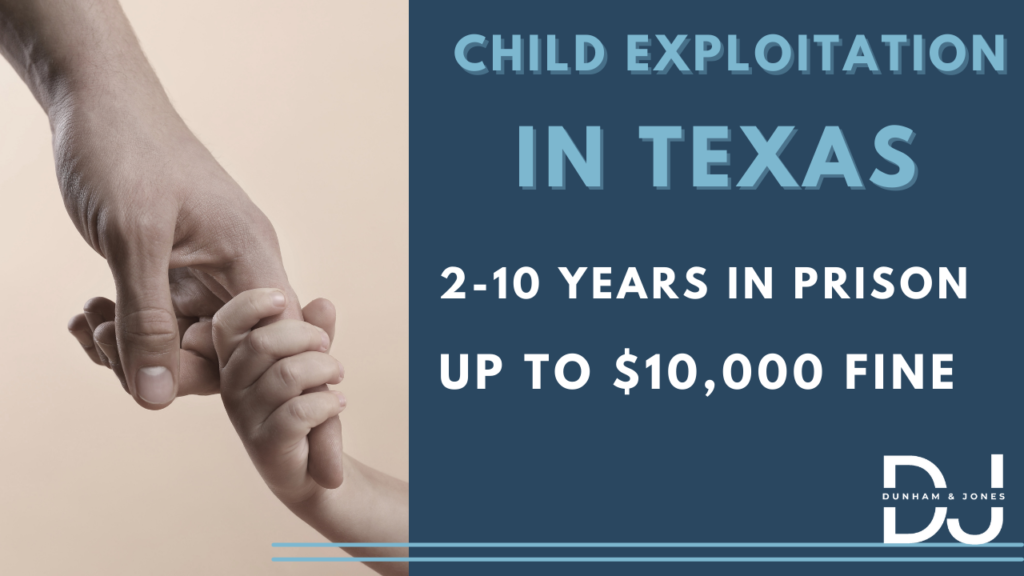
The penalty for this third degree felony is between 2-10 years in prison and up to a $10,000 fine.
2) Promotion
Under Texas Penal Code Section 43.26(e), promotion means sharing or distributing illegal material. This includes sending, uploading, trading, selling or posting online images or videos.
The penalty for this second degree felony is between 2 – 20 years in prison and up to a $10,000 fine. Promotion charges carry significantly harsher consequences. With any of these charges, securing the counsel of an experienced criminal defense attorney is critical in your defense. Charges of promotion or possession can potentially be reduced to probation or even dismissed entirely depending on the strategy of your defense attorney.
Age of the Minor as an Aggravating Factor
Texas law considers anyone under 18 years old a minor. However, prosecutors often treat cases involving very young children as more serious. The term “very young” is subjective, however, it may be considered any victim under the age of 14. Other aggravating factors may include a large number of files, prior convictions and distribution networks.
While the law applies equally to a 17-year-old and a 9-year-old, courts often impose harsher sentences when victims are younger due to the extreme vulnerability involved.
These cases often move quickly. In many situations, a warrant has already been issued before a person even knows they are under investigation.
Could you already have a warrant for your arrest? Check now!

Types of Child Pornography Cases
1) Electronic Images & Videos
Most modern cases involve digital content, such as phones, laptops, cloud storage, email, social media and messaging apps. Internet activity is frequently monitored both by platforms and law enforcement. Concerned citizens may also notice illegal posts or solicitations for materials and report tips to the authorities.
2) Physical Media
Many people are surprised to learn that physical media still exists! Illegal content containing child exploitation might be displayed in DVDs, VHS tapes, printed photos and old storage devices. Physical possession is treated the same as digital possession under Texas law, regardless of when the media was produced.
3) AI-Generated Images & Videos
As with many laws in our country, Texas law is evolving to address artificial intelligence.
Computer-generated images, altered photos, and deepfake videos may still be illegal if they depict minors in sexual situations, even if no real living child was involved. Possession and distribution of such material can still result in criminal charges. A person can still be charged with felony child pornography crimes even if the media was created artificially and there is no human “victim.”
Mandatory Sex Offender Registry
A conviction requires mandatory registration under Texas Code of Criminal Procedure Chapter 62. This is not optional if convicted and often lasts for life. This is a consequence that can often last much longer than any prison sentence.
A registered individual must report in person regularly, update changes to address, job, vehicles, email accounts and social media names. Failure to comply with requirements under the Sex Offender Registry may constitute a new felony charge.
Registry information is public, and is often damaging to a person’s personal and professional reputation. This information includes the offender’s name, photo, home address and offense description. Anyone can access this information, as it is free to the public.
Impact on Family Life and Employment
Registration as a Sex Offender can affect child custody, visitation rights, school involvement and where your children can live. This restriction might apply whether you are married or divorced to your spouse. Even if your offense did not involve your own child, family courts may impose restrictions to where your children can live.
Background checks will always reflect a person’s status on the Sex Offender Registry and may affect employment or housing opportunities. Many careers become permanently unavailable, such as education, healthcare, childcare and any coaching involving a minor. Professional licenses may also be suspended or revoked.
What Happens When You’re Arrested
Arrests usually occur after an investigation that you may not have even been aware of. A warrant is often already issued when an arrest occurs. Cases often begin through tips, internet monitoring, ISP reports and undercover stings. Many law enforcement professionals and departments are dedicated specifically to luring and capturing individuals seeking child pornography.
Once an arrest occurs, it’s important to have resources for getting bail. You or your family may seek services that assist with posting bail.
What Gets Seized
After an arrest, many items are seized for both preservation and further investigation as part of the criminal case against you. This may include your personal phone, personal computer, tablets, external drives, USB drives, gaming systems and cameras. Work owned and issued devices may also be seized as part of the investigation, even if they’re used only for work.
You might be surprised to learn that other devices in the house may also be seized. A spouse’s phone or laptop, children’s laptops, shared family devices or any other electronic device may be taken as part of the criminal investigation. Investigators want to determine who accessed what materials from what devices, and how many times. An experienced criminal attorney may be able to assist with the return of devices as your case progresses through the judicial process.
Defenses
Accidental Downloads
A person may unintentionally be exposed to child pornography. A strategic criminal attorney in Texas will use this information for your defense. Pop-ups, malware, or spam links may expose someone unintentionally.
Key factors in your favor might include whether or not you closed it immediately, whether or not the media was saved, and whether it was shared. All of this information leaves a digital footprint and can be tracked during an investigation.
Proving Intent
Prosecutors must show you knew the material involved a minor. A defense argument might include that the person portrayed in the material appeared to be 18 years or older, the content came from an age verified platform, or that there was no reason to suspect the individual was a minor. Intent is a critical factor in this felony charge.
Shared Devices
A skilled defense attorney may also argue that someone else accessed the device in which the material was found. Family computers, roommates, visitors and public WiFi have all been factors in criminal cases for child pornography.
Frequently Asked Questions
Can the creator of AI images be charged?
Can a minor be charged for sending unsolicited pornographic images?
What should I do if I receive unsolicited images?
Will contacting a lawyer trigger an investigation?
Will my family get their devices back?
Do other charges usually accompany these cases?
How can someone protect themselves?
Why might the FBI or federal authorities get involved?
This article provides general information and is not legal advice. Every case depends on its particular facts, charges, criminal history, court orders, and applicable law.